
Why River Protection Is No Longer Optional for Humanity?
By Global Nature Reserve
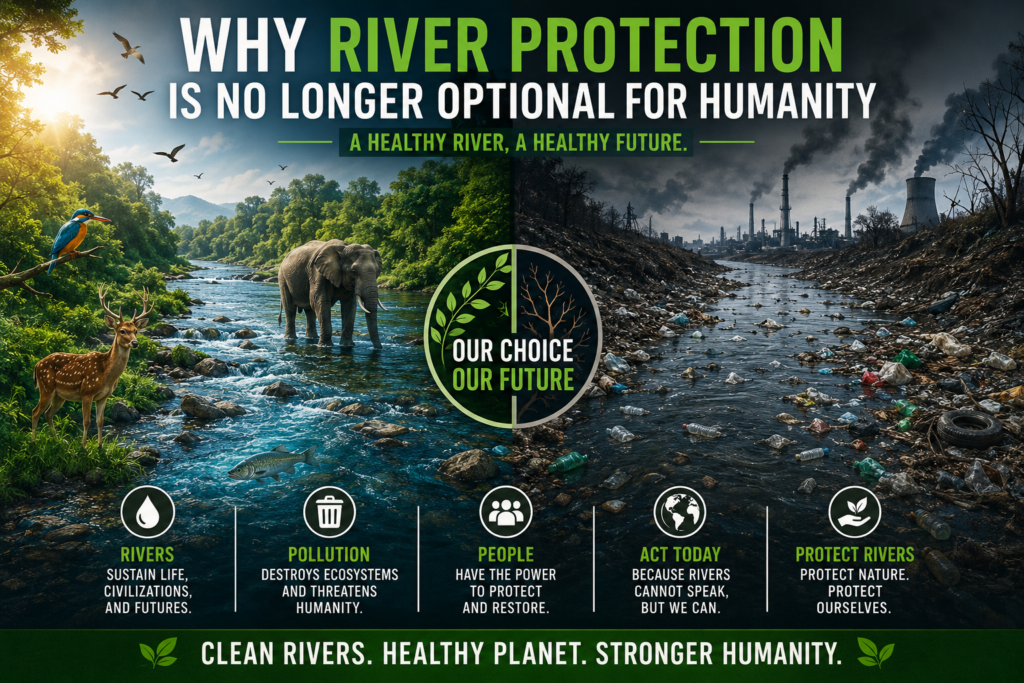
Rivers Are Dying in Front of Us
Across the world, rivers that once carried life are now carrying:
- sewage,
- industrial waste,
- plastic pollution,
- toxic chemicals,
- and untreated wastewater.
Many rivers no longer flow naturally.
Some barely flow at all.
What were once ecosystems supporting civilizations are turning into contaminated waterways struggling to survive.
And yet most people continue living as though rivers are infinite.
They are not.
Why Rivers Matter More Than Humanity Realizes
A river is not just water flowing through land.
Healthy rivers support:
- drinking water,
- agriculture,
- biodiversity,
- wetlands,
- forests,
- fisheries,
- groundwater recharge,
- and climate stability.
According to the United Nations, billions of people depend directly on freshwater ecosystems for survival.
When rivers become polluted:
- ecosystems weaken,
- diseases spread,
- food systems suffer,
- wildlife disappears,
- and communities lose safe water.
A dying river is never just an environmental issue.
It becomes a human survival issue.
The Main Reasons Rivers Are Being Destroyed
1. Untreated Sewage
One of the biggest threats to rivers globally is untreated sewage entering waterways.
The United Nations estimates that around 80% of global wastewater returns to the environment without proper treatment.
This means many rivers are carrying human waste instead of clean water.
2. Plastic Pollution
Plastic waste blocks water flow, harms aquatic ecosystems, and eventually breaks down into microplastics.
Millions of tons of plastic enter oceans every year — much of it carried through rivers.
Today, even remote waterways are contaminated by plastic.
3. Industrial Waste
Factories often discharge chemicals, heavy metals, and toxic waste into rivers.
This affects:
- fish populations,
- drinking water,
- soil quality,
- and surrounding ecosystems.
Some river systems become biologically dead because of industrial contamination.
4. Sand Mining and River Encroachment
Illegal sand mining destroys riverbeds and damages natural water flow.
Urban encroachment also reduces floodplains and weakens ecosystems that rivers depend on to survive.
India’s Rivers Need Urgent Protection
India is home to culturally and spiritually significant rivers.
Yet many river systems face severe pollution.
According to the Central Pollution Control Board, hundreds of river stretches across India are polluted because of sewage discharge and industrial waste.
The contradiction is painful.
We worship rivers.
Then we pollute them.
We call them sacred.
Then we treat them like drains.
No nation can survive long while destroying its freshwater systems.
Rivers Cannot Speak for Themselves
A river cannot protest.
A river cannot stand in court.
A river cannot demand justice.
That responsibility belongs to humanity.
This is why movements around the world are demanding legal rights and sovereign entity status for rivers and ecosystems.
Because rivers are not property.
They are living systems.
And living systems deserve protection.
What Can Ordinary People Actually Do?
Many people believe environmental protection is only the responsibility of governments.
It is not.
Individual and community actions matter more than people realize.
1. Stop Throwing Waste Into Waterways
Never dump:
- plastics,
- household waste,
- food waste,
- or chemicals into rivers or drainage systems.
Small actions multiplied by millions of people create massive impact.
2. Reduce Single-Use Plastic
Carry:
- reusable bottles,
- cloth bags,
- steel containers,
- and reusable products whenever possible.
Plastic eventually reaches rivers and oceans.
Reducing plastic use protects ecosystems directly.
3. Participate in Local Cleanups
Community river cleanups create:
- awareness,
- accountability,
- and visible environmental impact.
Even one cleanup can inspire others to act.
4. Raise Awareness
Share:
- ecological stories,
- local river conditions,
- wildlife issues,
- and environmental realities.
Awareness creates pressure for change.
Silence allows destruction to continue.
5. Support Rights of Nature Movements
Demand stronger protection for:
- rivers,
- wetlands,
- forests,
- and ecosystems.
Nature cannot survive under laws designed only around exploitation and profit.
Why Awareness Alone Is Not Enough
Humanity already knows pollution is dangerous.
The problem is not lack of information.
The problem is lack of responsibility.
People continue polluting rivers because environmental destruction feels distant — until water shortages, floods, contamination, and ecological collapse directly affect human life.
By then, recovery becomes much harder.
Prevention is always easier than restoration.
Rivers Still Have a Chance
Despite the damage, rivers can recover.
When pollution is reduced:
- ecosystems regenerate,
- fish populations return,
- water quality improves,
- and biodiversity slowly recovers.
Nature has remarkable healing ability.
But only if humanity stops actively destroying it.
Final Words
Every civilization in history depended on rivers.
And every future generation will depend on them too.
The question is simple:
What kind of rivers will we leave behind?
Will future generations inherit:
- flowing ecosystems,
- clean water,
- and thriving biodiversity?
Or polluted waterways filled with sewage and plastic?
The answer depends on what humanity chooses today.
Because rivers are not drains.
They are not property.
They are living ecosystems.
And if rivers die,
civilization eventually follows.
Take Action Today
- Stop polluting waterways.
- Reduce plastic use.
- Protect local ecosystems.
- Speak for rivers.
- Share ecological awareness.
- Demand stronger environmental protection.
The Earth cannot speak.
So we must.
